
ALL-SEASON RAINWATER HARVESTING
All-season rainwater harvesting is the collection and use of rainwater and snowmelt from the roofs of buildings. This water can be used to supplement non-potable water for toilet flushing, laundry, irrigation, industrial processes and many other applications.
STORMWELL’s advanced rainwater harvesting technology is a solution to water accessibility and climate change, supporting developers and homeowners in their pursuit of sustainability goals.
A STORMWELL SYSTEM FOR
EVERY BUILDING TYPE

Residential

Commercial

Industrial
HOW RAINWATER HARVESTING WORKS

COLLECTION
During periods of rain and snow melt, water flows down the roof and into an eavestrough or drain. A leaf guard or inline pre-storage filter upstream of the storage tank(s) removes debris such as twigs, leaves and shingle pebbles preventing foreign material from entering the collection system and optimizing water quality.
CONVEYANCE
Rainwater flows into the downspout or roof drain pipe and is directed into a storage tank. Once the storage tank is full, excess water flows back out through an overflow.


STORAGE
Collected rainwater is housed inside a storage tank or tanks, the type dependent on the application and site. The tank(s) can be located in a basement, cast in place within a building or buried underground.
TREATMENT
Water is pumped from the storage tank(s) to the STORMWELL control console where filters remove particulates and the UV system destroys bacteria and viruses. The smart system continually monitors and controls operations.

DISTRIBUTION
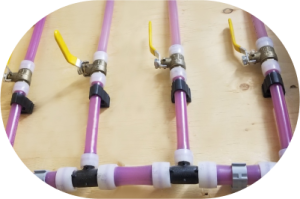
Treated rainwater leaves the control console and is distributed through dedicated piping to intended end uses, subject to local building codes.
BENEFITS OF RAINWATER HARVESTING
Drought and climate change have forced a rethink of water supply and security. Currently, over 75% of large Canadian cities have seasonal water use restrictions.

Homeowners
- Water bill savings.
- Increased home resale value.
- Daily water needs supplemented by reducing municipal water usage upwards of 50%.
- Water security in times of drought and municipal water delivery disruptions.
- Source of naturally soft water.
- Self-sufficiency.

Municipalities
- Reduces strain on aging infrastructure and increasing water demands.
- Lowers greenhouse gas emissions through reduced pumping requirements.
- Protects finite groundwater sources.
- Lowers water treatment requirements through reduced municipal water demand.
- Mitigates flooding and water stagnation in urban areas.

Developers
- LEED certification / Passive House / etc… are becoming the norm.
- Increase market competitiveness with sustainably built homes.
- May offset requirements for retention ponds and other stormwater management structures.
- Increasingly, municipalities are supporting conservation and incentivizing rainwater systems.
- Positions developers as construction leaders.

Industry
- Offsets municipal water usage where non-potable water may be used for manufacturing processes.
- Mineral free rainwater increases life of boiler and chiller systems with decreased equipment maintenance.
- Corporate marketing tool to position business as an environmentally sustainable leader.
- Environmental, social, and (corporate) governance (ESG).